Practice and Green Building Movement
Strengthening Africa's Green Building Movement
Day 1 grounds the Summit in practice: what Africa is already doing, what has been achieved, and what must be strengthened to move green building from demonstration projects into mainstream development practice across the continent.
Focus areas
See full day focus
Highlighted speakers
- Continental green building council leaders
- Climate-responsive architects
- Urban sustainability innovators
Visual direction
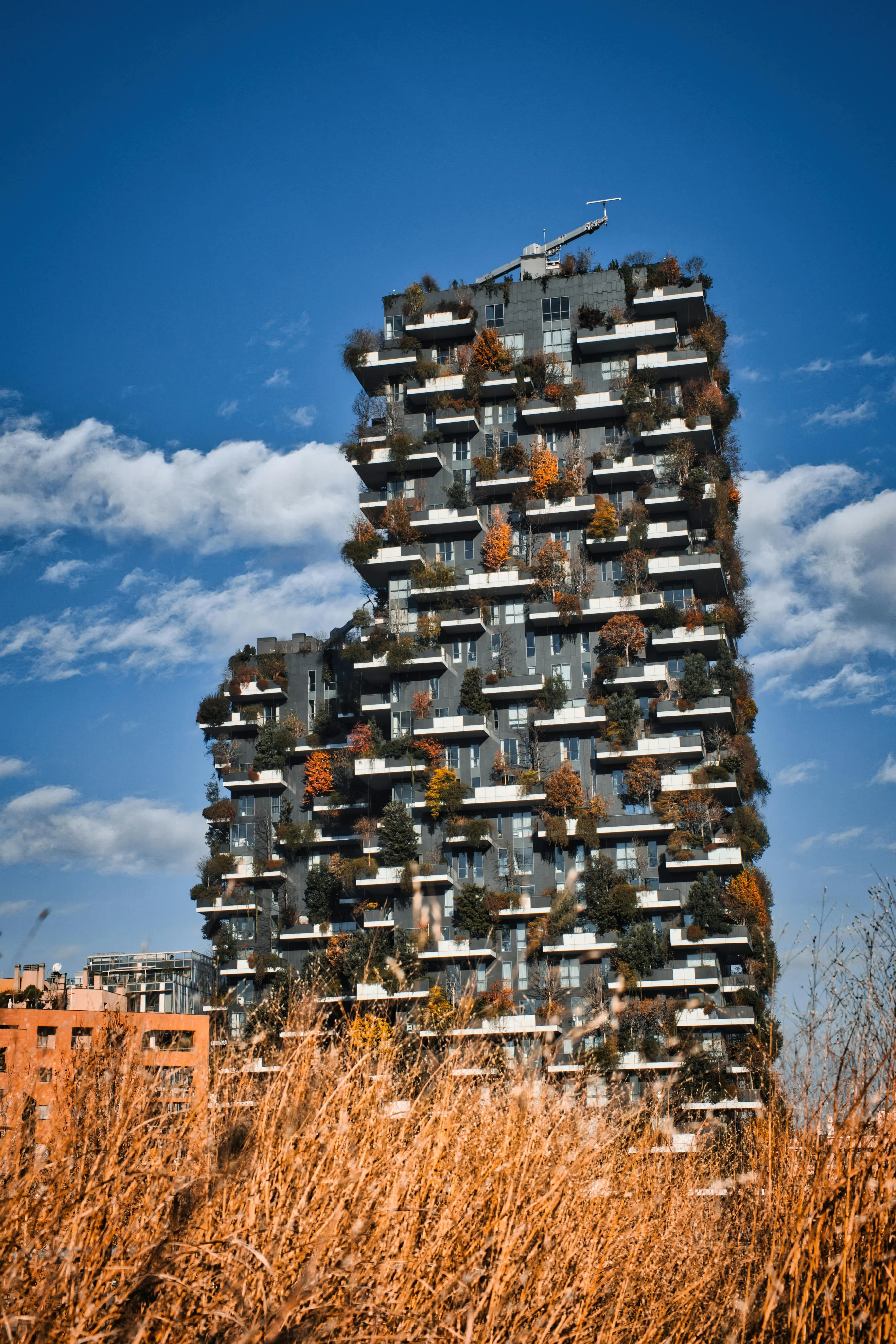
African skylines, sustainable architecture, biomimicry, and community-led innovation.
Read the full day brief
Day 1 opens the Africa Green Building Summit 2026 by grounding the conversation in practice. It focuses on what Africa is already doing, what has been achieved, what remains difficult, and what must now be strengthened if green building is to move from selected demonstration projects into mainstream development practice.
Across the continent, cities are expanding, infrastructure demand is rising, and the need for quality housing, public buildings, commercial space and resilient urban systems is becoming more urgent. Africa still has the chance to shape much of its future building stock in a way that is more resource-efficient, climate-responsive, healthier, and better aligned with long-term development needs.
Green Building Councils, built environment professionals, developers, contractors, municipalities, certification experts, academics, technology providers and innovators across Africa are already generating lessons that can inform the next phase of the continent's green building movement. Day 1 brings these experiences into one shared continental space, covering certification, passive design, energy efficiency, water conservation, sustainable materials, lifecycle performance, indoor environmental quality, resilience, facilities management and building performance evidence.
A key focus will be the practical use of certification tools such as EDGE, Green Star, LEED and emerging local rating systems, and the questions they raise around affordability, technical capacity, documentation, verification, professional training and relevance to local African contexts.
Green building must not be presented as an imported ideal or a luxury concept. It must be understood as a practical response to African realities: energy insecurity, water stress, rising operating costs, urban heat, infrastructure pressure, climate vulnerability, affordability constraints and the need for healthier buildings.
Professional capacity is a central theme: the skills, training, tools and institutional support architects, engineers, planners, valuers, quantity surveyors, project managers, contractors, facilities managers and public-sector officials need to treat sustainability as part of how buildings are planned, designed, financed, approved, constructed and operated.
Practice demonstrates. Africa already has the ideas, projects, professionals and institutions needed to advance green building. The next step is to connect them, strengthen them and scale their impact.
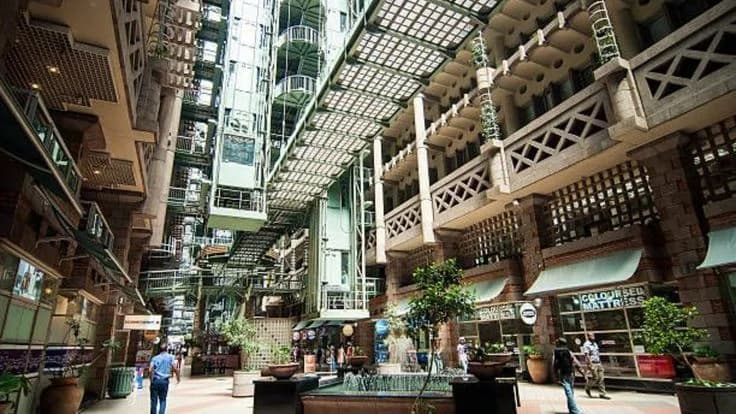
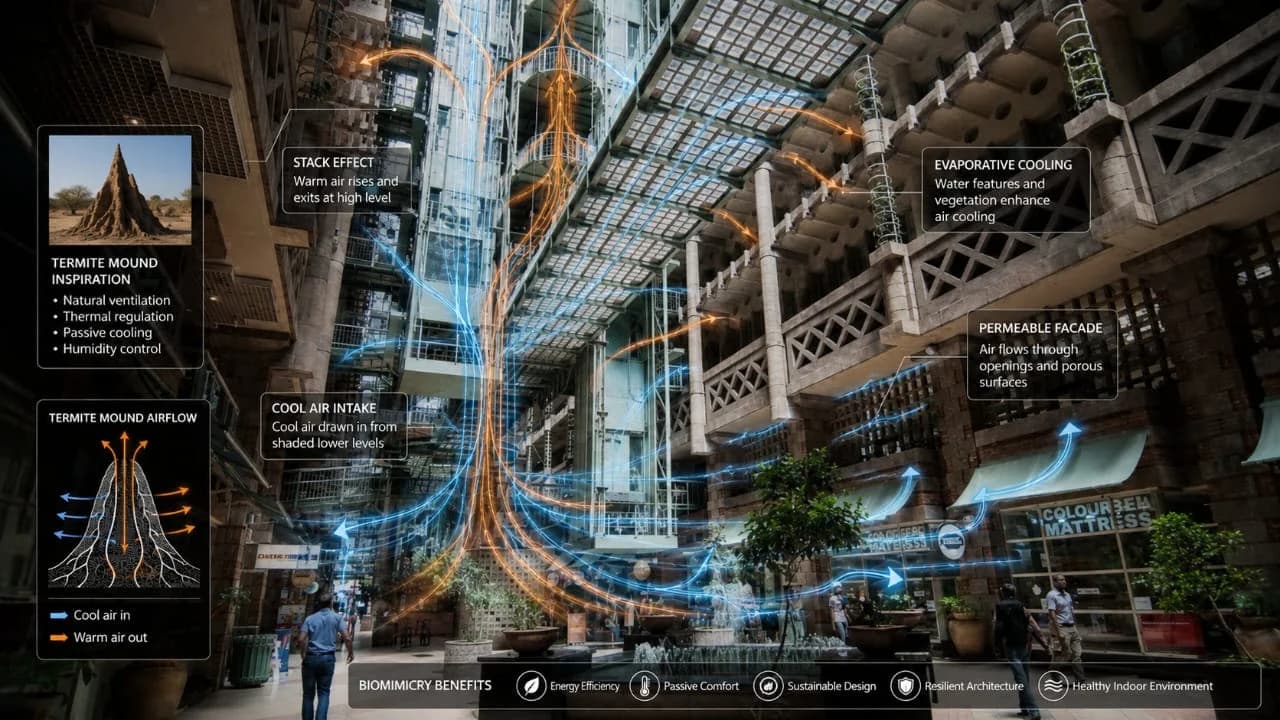
Swipe or drag to reveal systems
Eastgate Centre